

Over the past year, I’ve been asked this question more times than I can count:
“Is it time to transition into AI Engineering?” “Is it too late?”
If you spend even a few minutes on LinkedIn, it can feel like the center of gravity has shifted. Suddenly, everyone is building agents, deploying RAG pipelines, experimenting with orchestration frameworks, and rebranding themselves as AI Engineers.
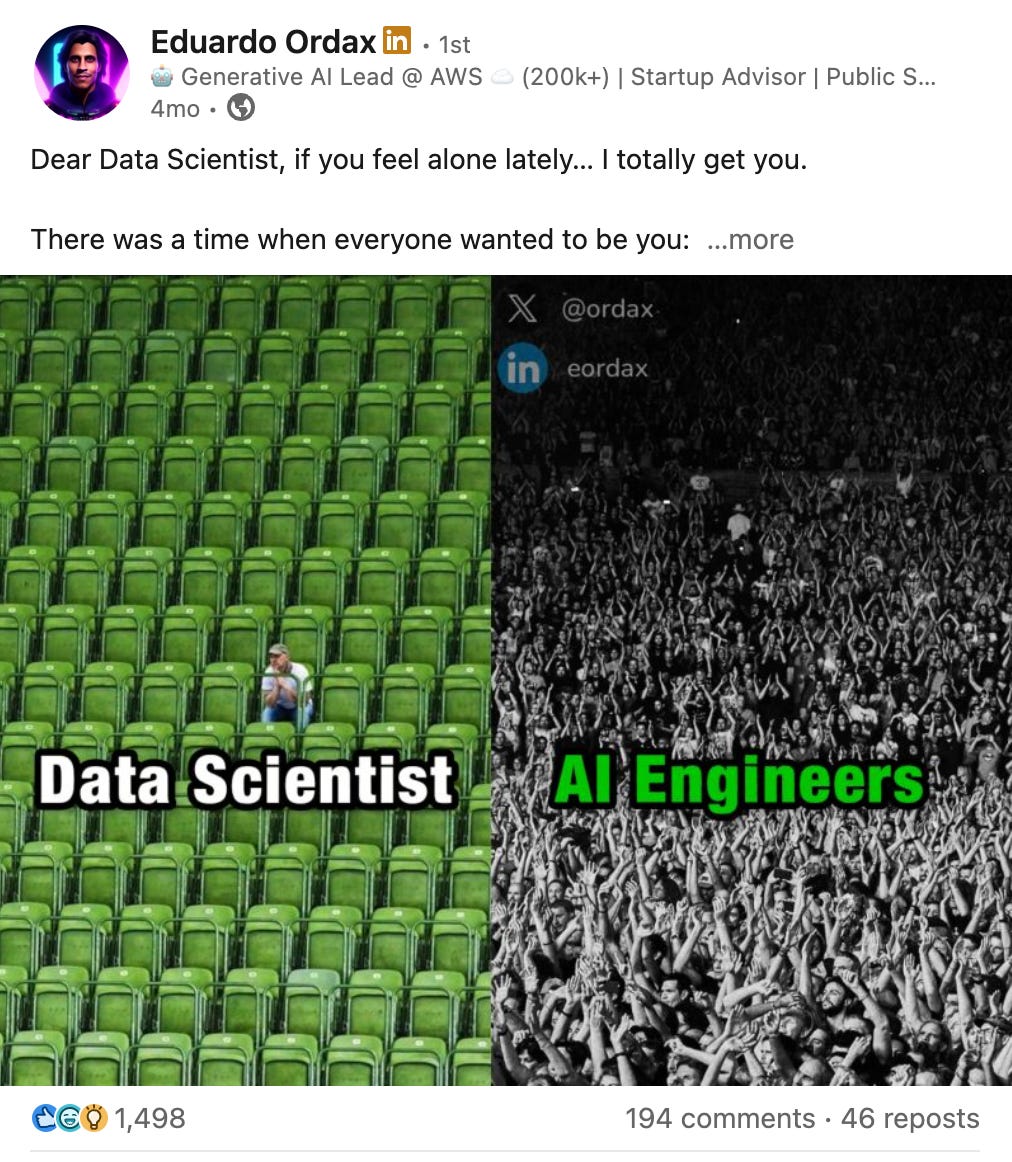
But before you change your title, you need to answer a deeper question:
Are you genuinely drawn to that work…or are you reacting to the fear of becoming irrelevant?
Let’s slow it down and look at it properly.
What AI Engineers Actually Do
Strip away the hype, and AI Engineering looks a lot like software engineering applied to AI systems. It’s about designing, building, and operating intelligent applications reliably in production.

In practice, this often means:
Designing LLM-powered applications
Implementing retrieval-augmented generation (RAG) pipelines
Orchestrating multi-step workflows or agents
Connecting models to APIs, databases, and internal tools
Monitoring performance, latency, cost, and reliability
The focus is far from discovering insights in a dataset and more on constructing systems that consistently deliver value at scale.
You’re thinking about architecture, state management, evaluation frameworks, logging, versioning, and deployment environments. You’re asking questions like:
How do we make this robust?
How do we reduce hallucinations?
How do we measure quality over time?
Compared to traditional Data Science roles, there is typically less emphasis on exploratory analysis, hypothesis-driven experimentation, and stakeholder-facing storytelling.
That doesn’t make one role superior to the other, but it does mean they reward different strengths.
Data Science Is Already Evolving
I often talk to people seriously considering this transition, and what they often overlook is that Data Science hasn’t stayed static.
Modern data scientists are increasingly expected to:
Write production-ready code
Own pipelines end-to-end
Collaborate closely with engineering
Think about deployment and monitoring
Use AI tools to accelerate analysis
The “pure modeling” specialist is not disappearing (anytime soon at least) but is becoming rarer outside very large organizations. In many teams (like the one I’m currently in at Nextory), the line between Data Scientist and AI Engineer is already blurred. You may not carry the AI Engineer title, but you’re doing parts of the job.
So this transition isn’t a binary jump. It’s a movement along a spectrum.
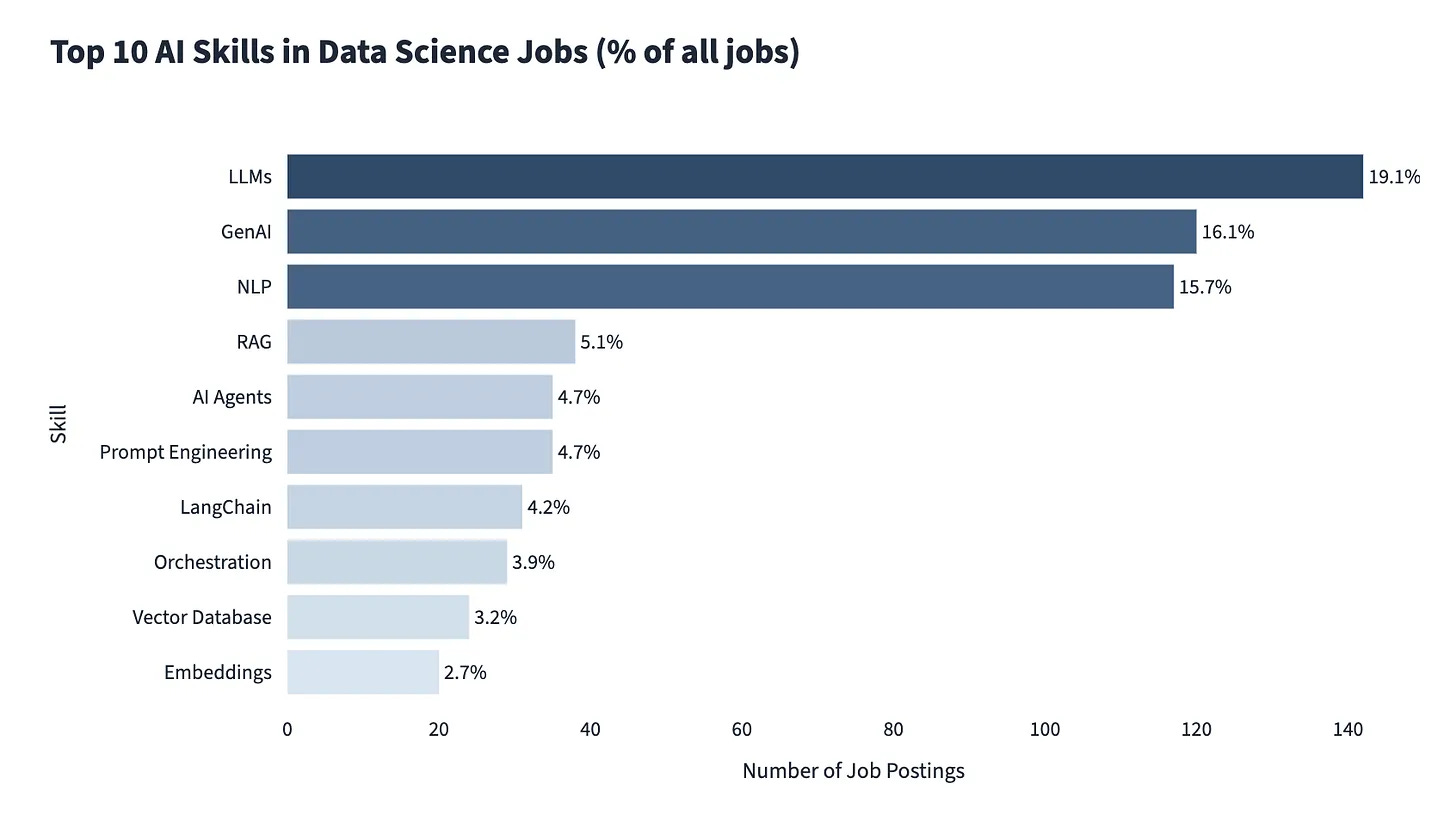
If you want to learn more about what this looks like in practice, check out this job market report:

Why You Might Want to Transition
But okay, let’s figure out if this is actually the right move for you, because you might genuinely thrive in AI Engineering if you feel more energized by building systems than analyzing outcomes.
If your curiosity is triggered by questions like:
How should this architecture be designed?
What’s the cleanest way to structure this workflow?
How do we evaluate this agent automatically?
If you enjoy debugging integrations more than interpreting experimental results, that’s a signal.
Some data scientists were always drawn to building intelligent systems. For years, that meant moving toward ML Engineering or MLOps. Now, AI Engineering is another branch of that same instinct.
If you’ve consistently been more excited by building and operationalizing systems than by running experiments or presenting insights, this isn’t hype; it’s alignment.
Why You Might Not Want To…
Many data scientists chose this path because they thrive in ambiguity and enjoy framing messy business problems, designing experiments, and translating data into decisions.
There is a creative element in analysis that often goes unnoticed: defining the right metric, interpreting conflicting signals, identifying behavioral patterns, and influencing product strategy.
If what gives you satisfaction is shaping decisions rather than shipping infrastructure, then moving fully into engineering could slowly disconnect you from what you actually enjoy.
In reality, most data scientists won’t fully “switch” roles. They’ll become more AI-native instead. That means understanding how LLM systems work, being able to prototype AI workflows, knowing how to evaluate outputs, and collaborating effectively with engineers who own the deeper infrastructure.
The strongest profiles will combine business context, analytical rigor, engineering awareness, and AI literacy. The future is less about changing your title and more about expanding your toolkit.
Why I’m Not Transitioning
Personally, I’m not moving into a full AI Engineering role, at least not right now.

That’s not because I’m ignoring where the field is going. I’m already building AI systems to automate parts of my work and have built AI-driven products on the side, and teaching practical AI workflows has become a core part of what I do.
The reason is simpler: I genuinely enjoy staying close to the business layer. Shaping metrics, designing experiments, and connecting analysis to strategy is what feels most meaningful to me.
If I moved too far into full-time infrastructure and architecture, I’d lose the proximity to decision-making that makes the work fulfilling.
Final Thoughts
The real risk isn’t choosing the wrong title. The real risk is drifting into a role that doesn’t align with your strengths simply because the market shifted.
There is good money in AI Engineering, and working with emerging technology can be genuinely exciting. But alignment with your interests and the kind of work that actually energizes you is what sustains a career over time.
That’s what truly future-proofs you.
A couple of other great resources:
🚀 Ready to take the next step? Build real AI workflows and sharpen the skills that keep data scientists ahead.
🤖 Struggling to keep up with AI/ML? Neural Pulse is a 5-minute, human-curated newsletter delivering the best in AI, ML, and data science.
Thank you for reading! I hope this guide helps you decide what is the best path for you.
- Andres Vourakis
Before you go, please hit the like ❤️ button at the bottom of this email to help support me. It truly makes a difference!
Love this! 🙌 As a data scientist I’ve been feeling this too and I agree that what’s important isn’t your title but the toolkit you carry!