

Late last year, I published an article analyzing the data science job market, drawing primarily on two independent studies: one from Harvard University and another from the labor market analytics company Lightcast.
The main takeaways from those two studies were as follows:
1. The need for data scientists is not disappearing; in fact, there is an increasing demand for data talent that knows AI
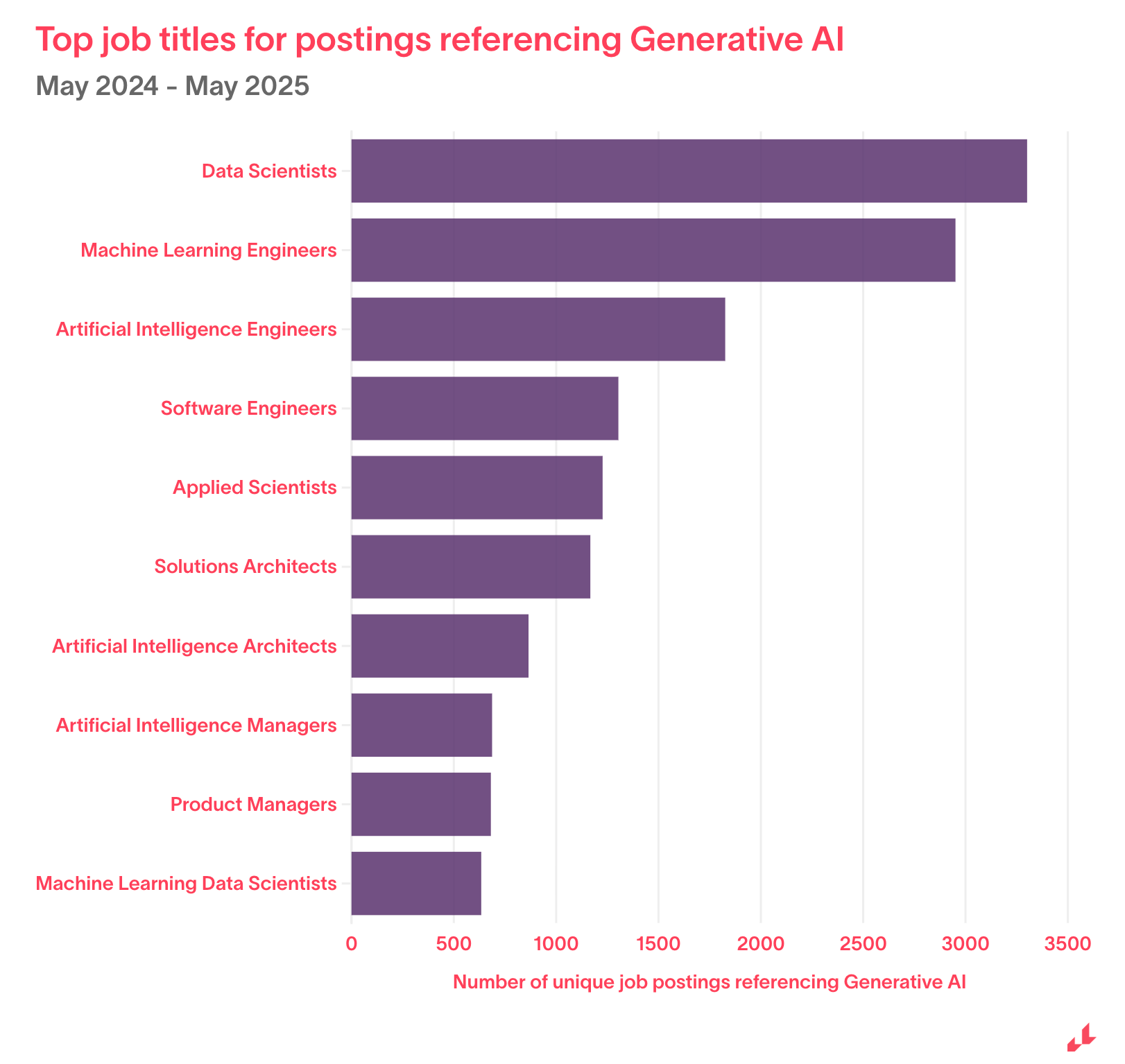
2. Senior roles are benefiting the most from AI adoption
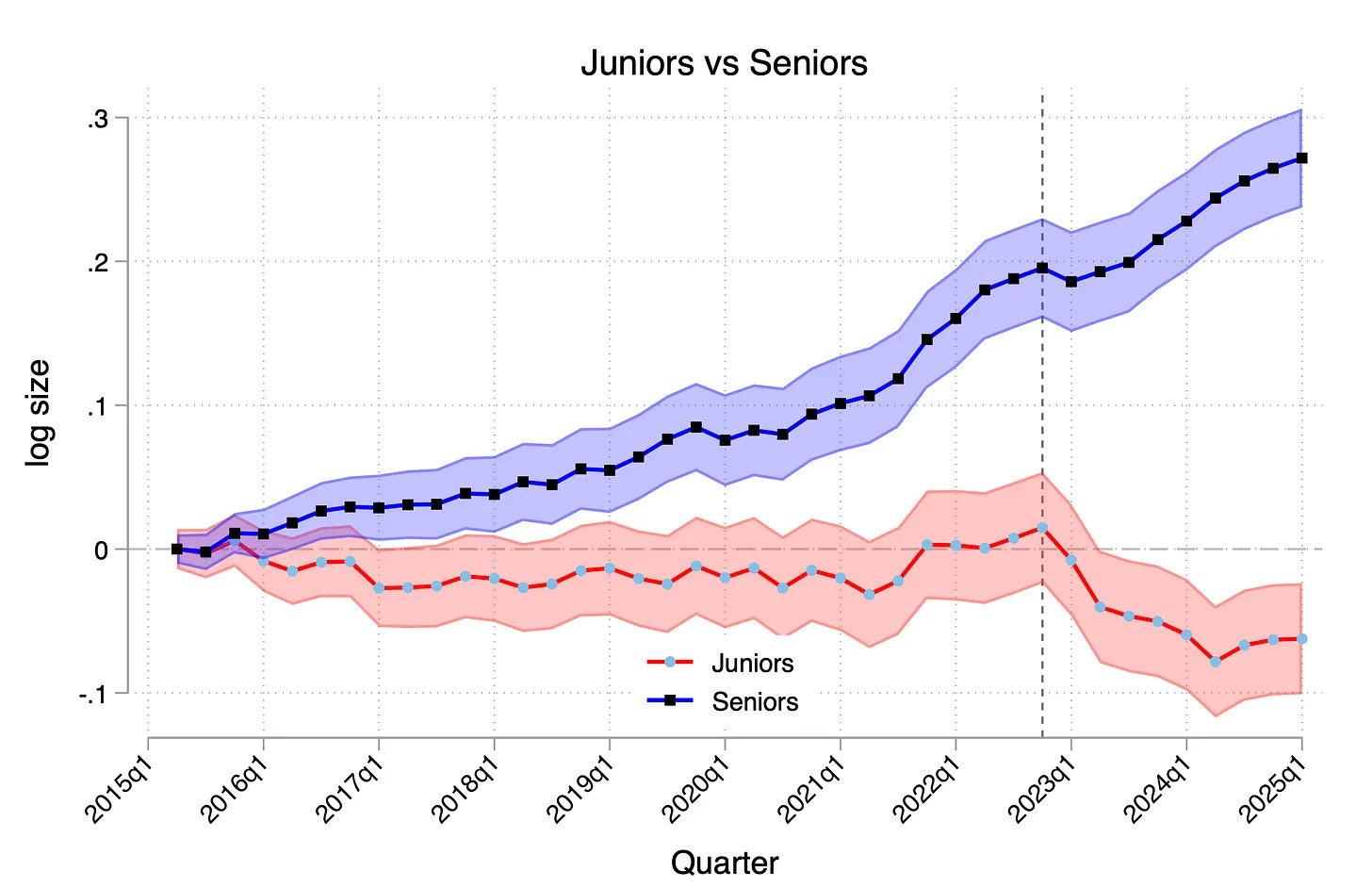
You can read more about how those conclusions were drawn here.
Those findings were directionally clear, but they were also high-level.
They told us what was happening, not necessarily how it was showing up in actual hiring. And given how fast AI tools and expectations have evolved over the past year, I didn’t feel comfortable assuming the story had stayed the same.
That’s why I wanted to look closer.
So I scraped and analyzed 700+ Data Scientist job postings in the US, spanning November through January 2026. This report is not meant to be definitive, but it provides a strong early signal into how demand for AI skills is actually shaping up as we enter the year.
I will cover:
What’s changed since the last analysis?
Which AI skills are actually being asked for in data scientist roles today?
Who is feeling the impact of AI demand the most?
📌 And at the end, I’ll share some strategies for how data scientists can adapt their skill sets and stay competitive.
Let’s get to it!
The core skill stack for data scientists hasn’t changed, but AI adoption has accelerated
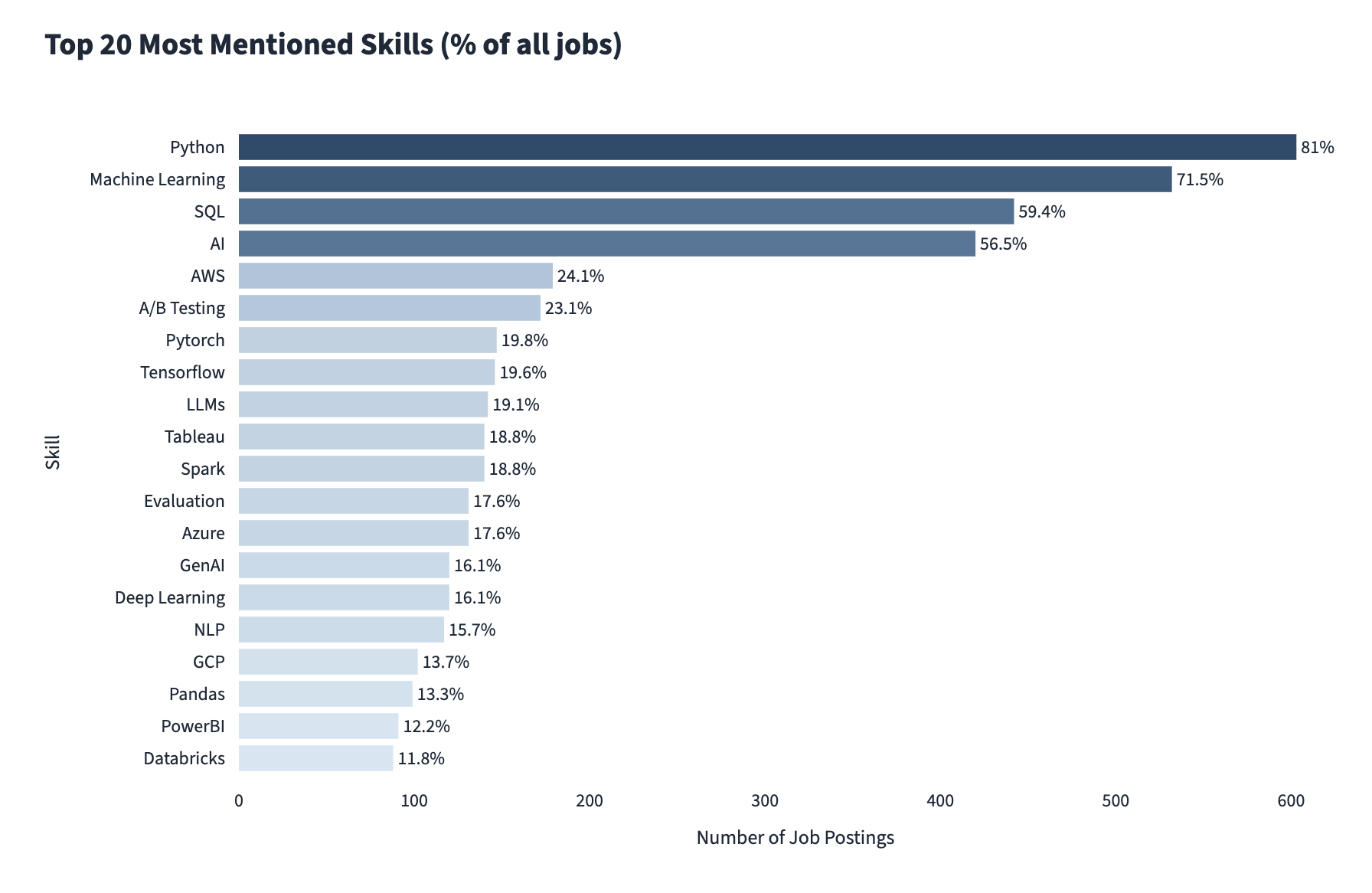
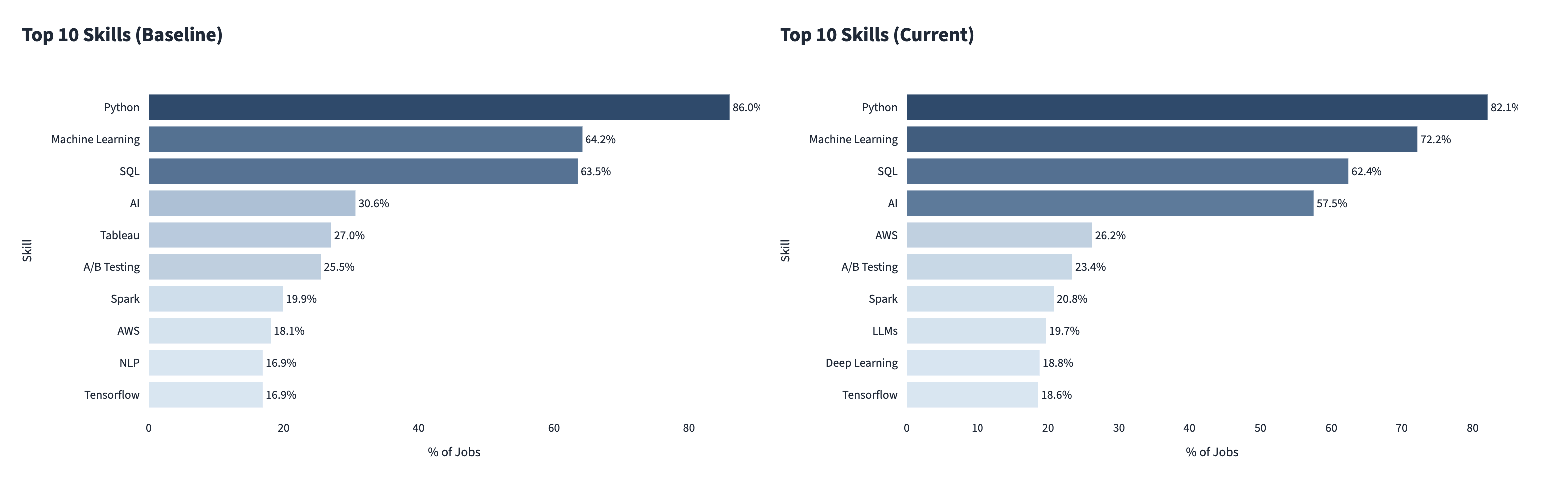
Looking at the most mentioned skills across all data science job postings, the fundamentals remain stable: Python, machine learning, and SQL still dominate.
What stands out is that AI has increased in demand, referenced in more than half of all postings. And most notably, LLMs have entered the top 10 when compared to the previous year. This suggests that AI is no longer framed as a niche specialization, but as an expected extension of the standard data science toolkit.
That said, not every mention of the keyword “AI” implies deep technical ownership, many roles reference AI in a broader sense, such as collaborating on or supporting AI-related work.
Within AI-focused data science roles, LLMs clearly lead skill demand.
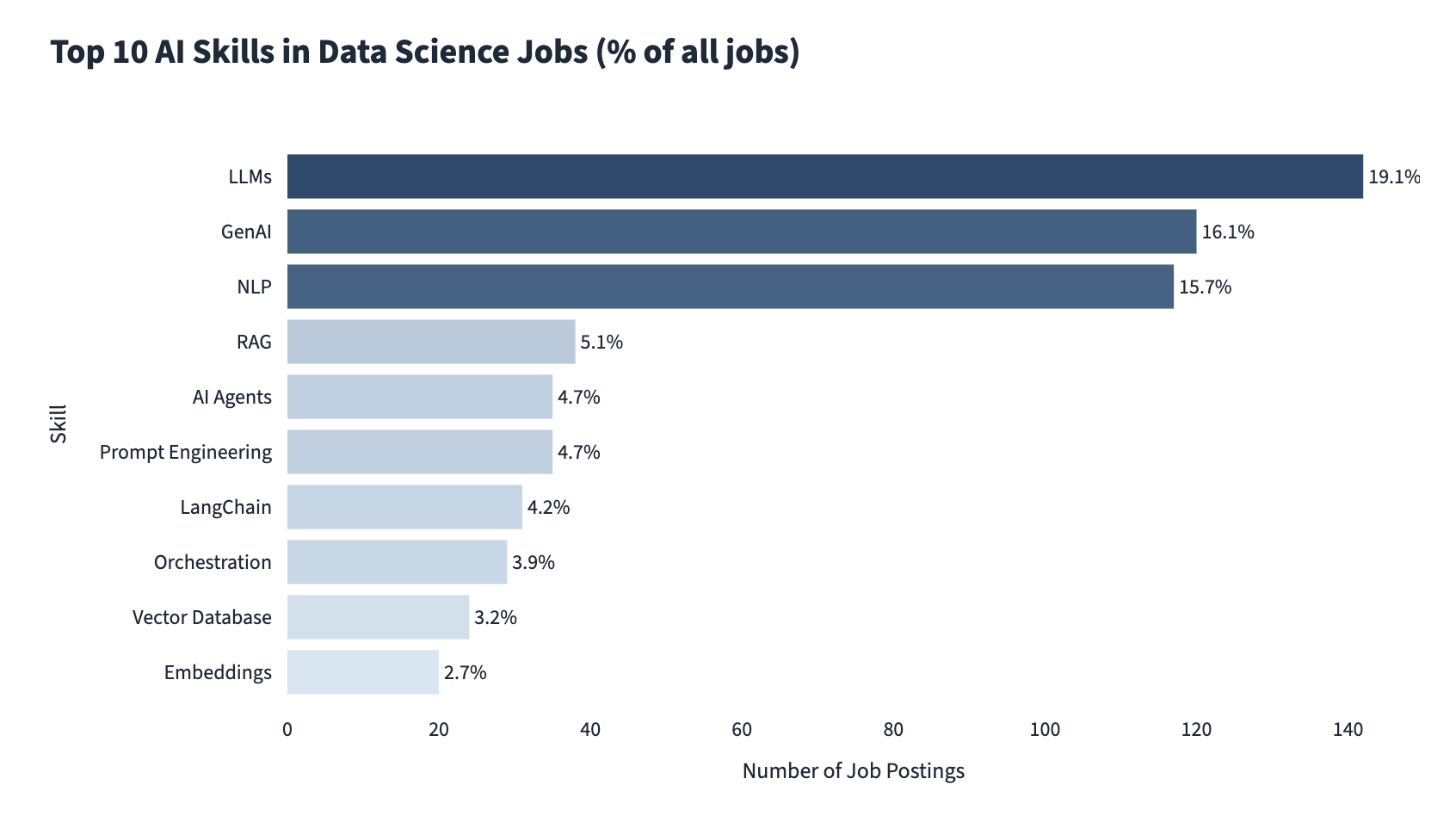
Zooming in on jobs that explicitly mention AI, LLMs emerge as the most requested AI skill, followed closely by GenAI and NLP.
Beyond these top three, demand shifts toward more applied capabilities such as RAG, AI agents, prompt engineering, and orchestration, indicating that companies are increasingly looking for data scientists who can work with AI systems in practice, not just conceptually.
AI-heavy roles skew toward mid-to-senior Data Scientists
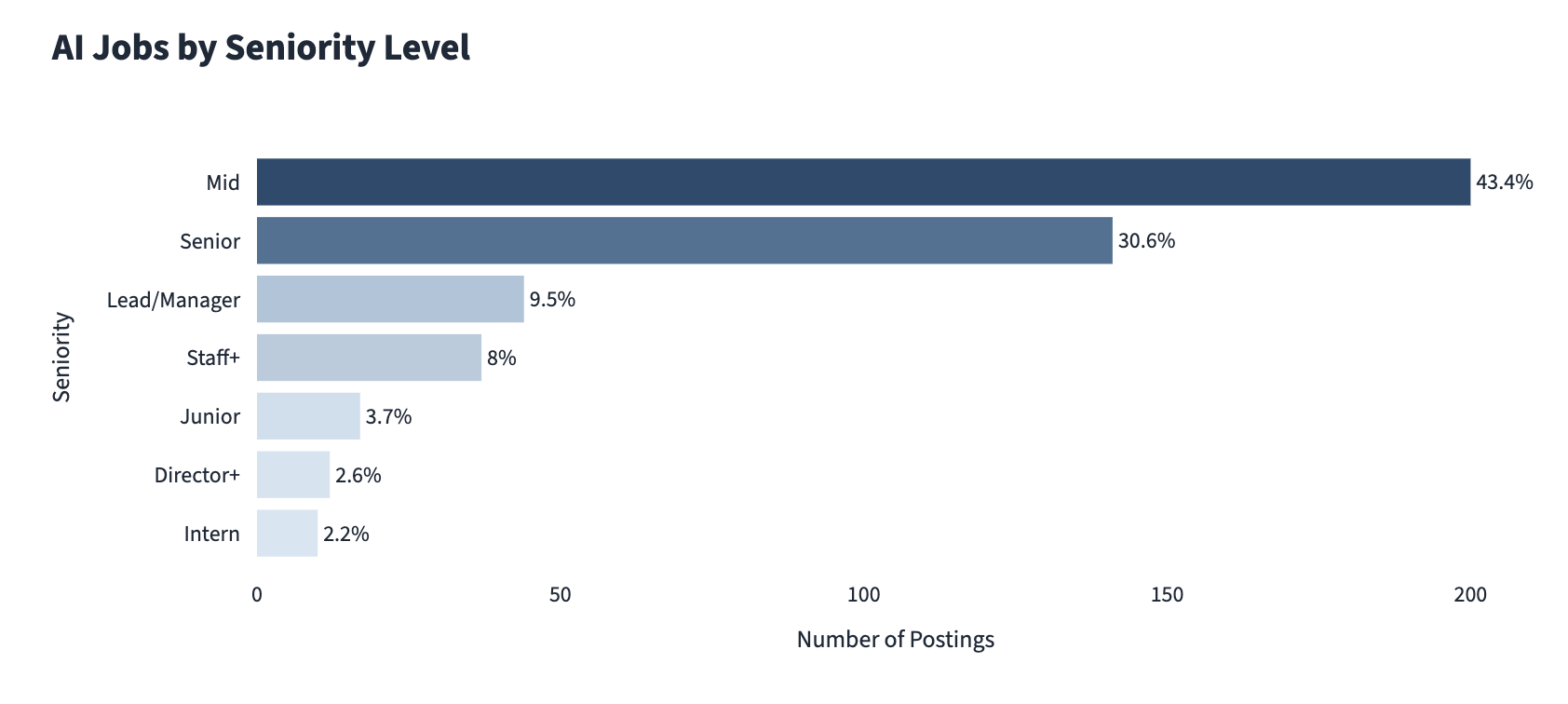
When we look at where these AI requirements appear across seniority levels, the demand is far from evenly distributed.
The majority of AI-focused postings target mid and senior data scientists, reinforcing the idea that companies expect experienced practitioners to translate AI capabilities into real systems and business outcomes.
By the way, this aligns closely with the earlier Harvard findings, where the benefits of AI adoption are most concentrated in more senior roles
Some data scientist roles want AI literacy, others want hands-on builders
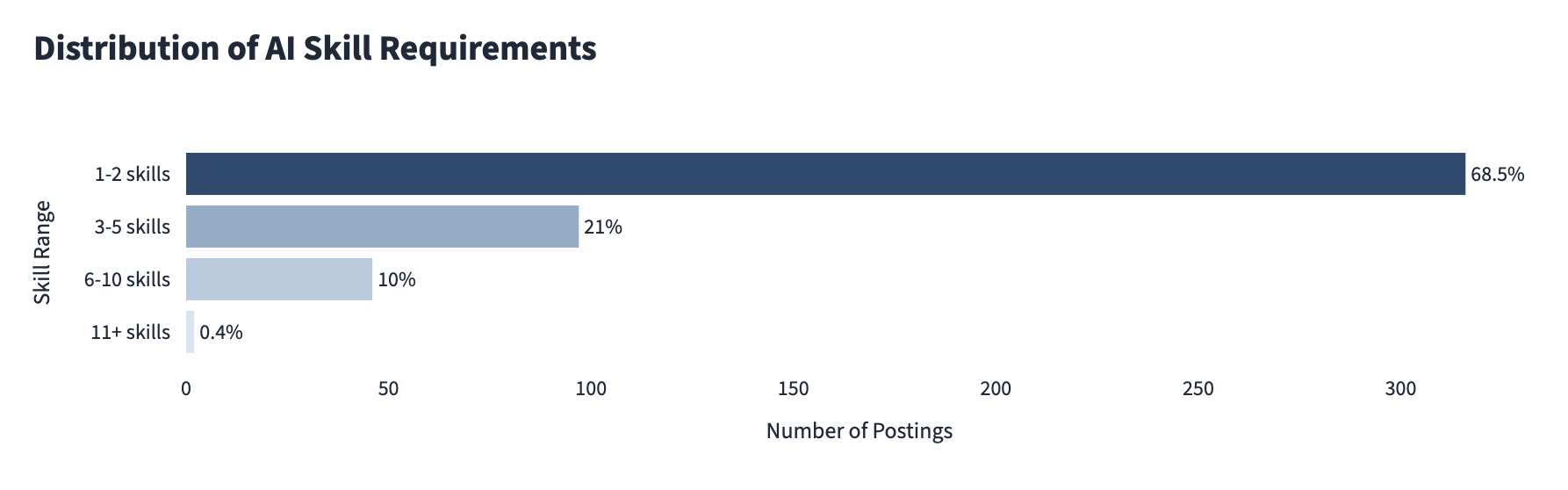
The distribution of AI skill requirements shows a split in how companies think about AI capability. Many roles still ask for a small number of broadly defined AI skills, but a significant portion now require experience across multiple concrete areas, such as LLMs, RAG, prompt engineering, and vector databases.
Here we can see a snippet of what this looks like across different job postings:
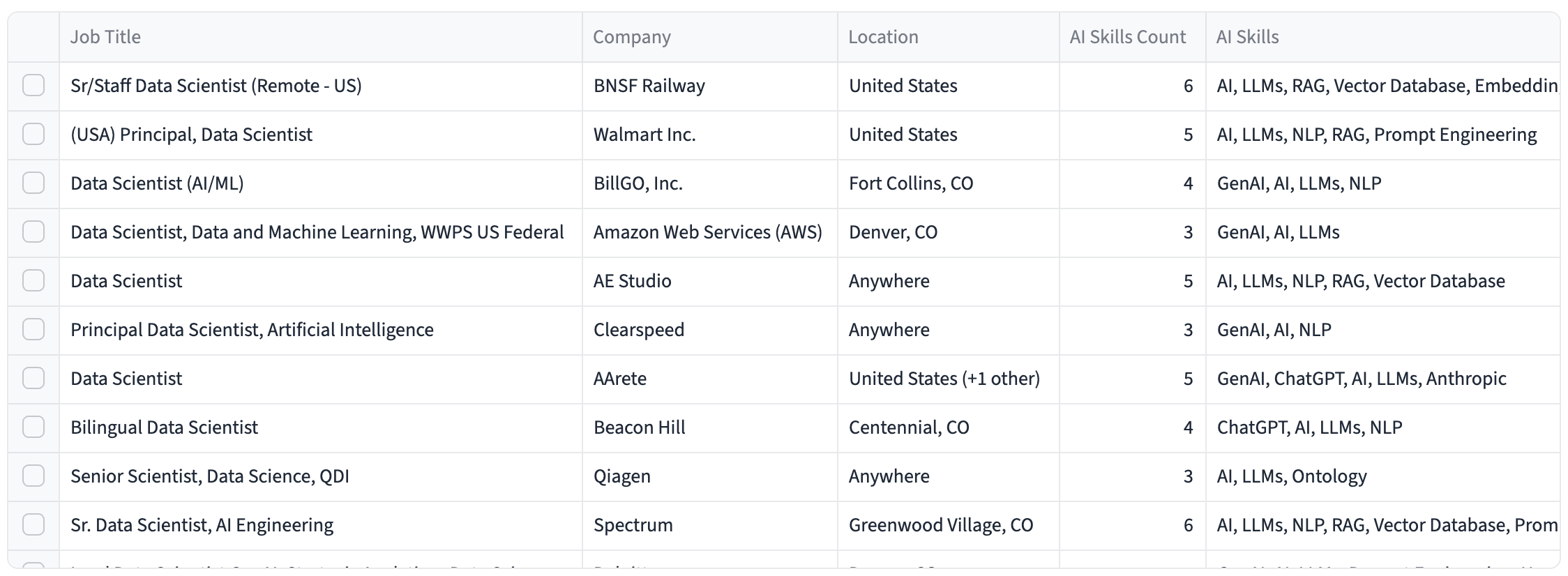
This points to growing demand for data scientists who can actually build and deploy AI-driven systems, not just understand them conceptually.
AI skills are mostly embedded in standard Data Scientist roles
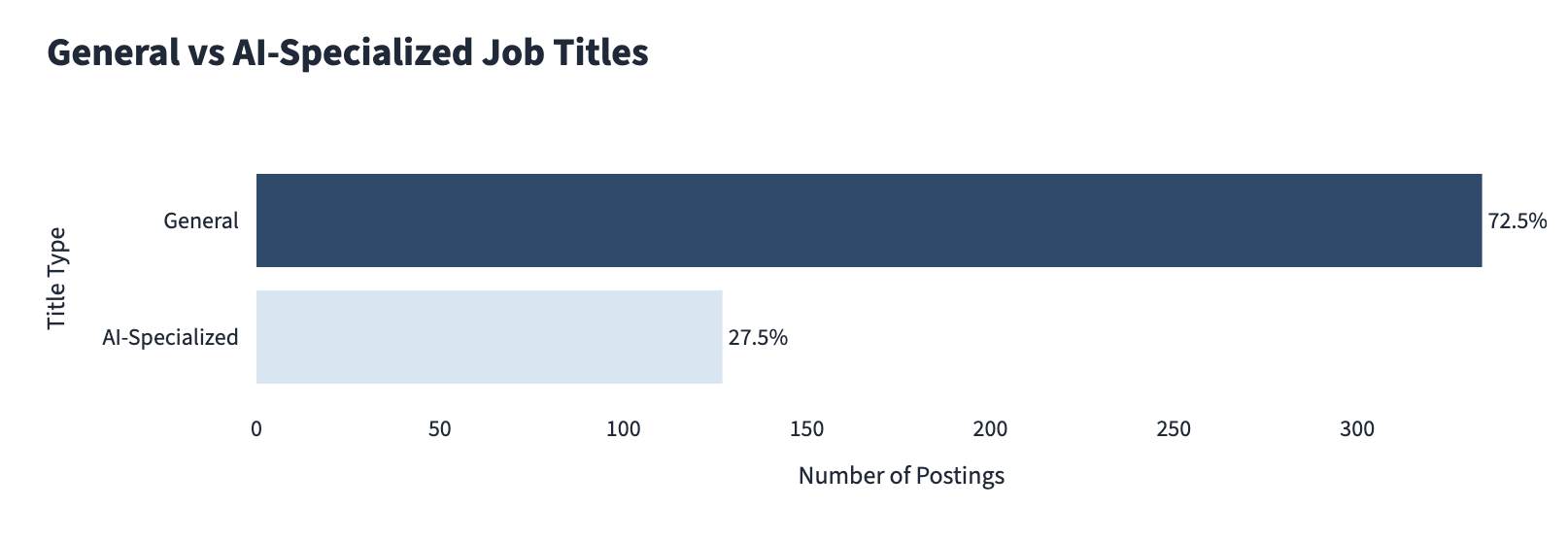
Even when AI skills are explicitly required, the majority of postings still use standard titles like “Data Scientist” (which only specify seniority, location, or traditional domains), with AI referenced in the skill requirements rather than the role name.
Only a smaller share of roles explicitly call out AI, GenAI, or LLMs in the title, indicating that, at least in the current data, AI expectations are primarily expressed through requirements, not naming conventions.
Preliminary findings: AI-focused data science roles are beginning to show a salary lift
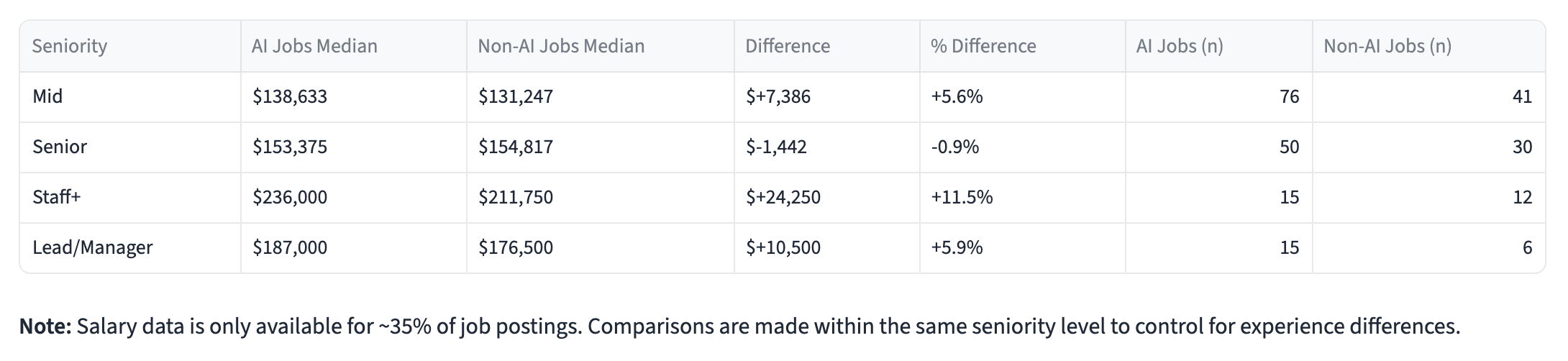
Across most seniority levels, data science roles that explicitly mention AI tend to show higher median salaries than comparable roles that do not. This suggests an emerging AI-related salary premium within data science, but the signal is still early.
Salary data is only available for roughly a third of postings, and some seniority bands have limited samples, so this should be interpreted as directional rather than conclusive.
Summary
Here is a recap of the key findings:
Are AI skills in demand for data scientists? Yes, about 60% of postings expect AI capability, either broadly or through specific skills like LLMs, RAG, and AI agents.
Which AI skills should I focus on? Experience with LLMs was the #1 AI skill requirement, appearing in ~20% of all job postings.
About 1 in 3 AI-related postings (31%) require hands-on expertise across multiple specific AI skills: LLMs, RAG, Prompt Engineering, vector databases, and more. This signals growing demand for practitioners who can build and deploy AI systems, not just understand AI conceptually.
Which roles are the most impacted? AI demand concentrates at mid-to-senior levels: 73% of postings mentioning AI skills target mid (43%) and senior (30%) roles, while entry-level positions account for less than 6%.
Are job titles evolving? Currently, 73% of Data Scientist postings with AI requirements use standard titles like “Data Scientist” (and only specify seniority, location, or traditional domains) while 27% explicitly call out AI/GenAI/LLM in the job title, suggesting AI skills are increasingly expected within traditional roles.
Any other trends I should keep an eye on? Agentic Analytics, Semantic Layers, and ontologies are already being mentioned, although in just a handful of jobs. My bet is that this will only continue to increase as the year progresses.
One thing is clear: AI is becoming a core part of the data scientist role, and it is already influencing expectations, scope, and career progression.
Here is my proven roadmap to build these skills in 2026
Everything I’ve shared so far reflects clear patterns already taking shape across the field and what they imply for data scientists going forward.
Over the past year, one way I’ve personally responded to these shifts is by building and refining a bootcamp focused on agentic analytics, AI workflows, and system-level thinking. It’s designed for data scientists who want to move beyond isolated analyses and start building end-to-end systems that actually scale their impact.
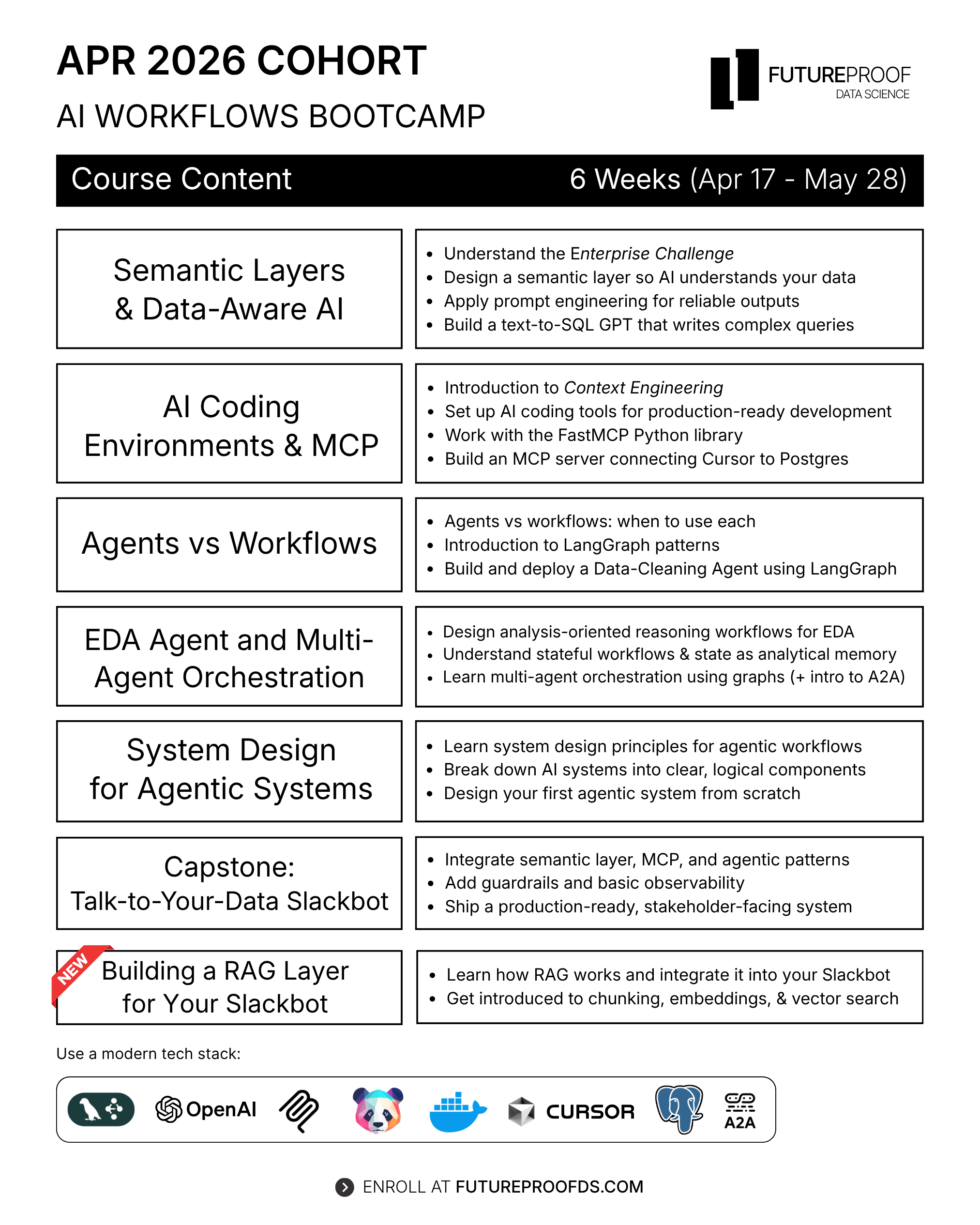
So far, we have helped over 40 data professionals future proof their careers. This is what some of the alumni had to say:
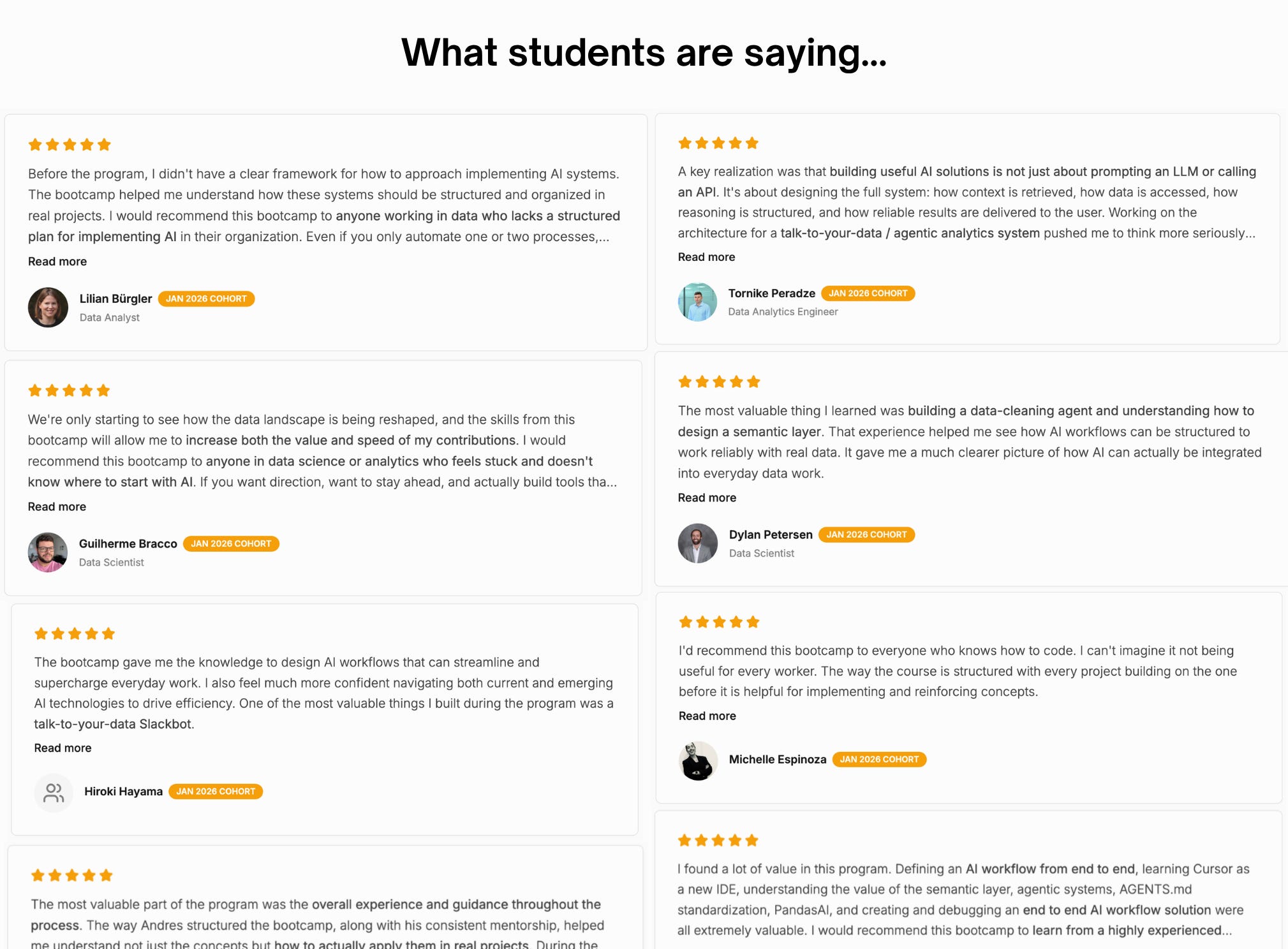
Enrollment for the April 2026 cohort is now open, but seats are limited:
Enrollment closes in only 6 days. Keep in mind that if you miss this cohort, the next one won’t be available until later in the year.
Regarding the analysis approach
My plan is to continue scraping job postings throughout the year and revisit this analysis again before the summer.
In the meantime, I’m going to clean up the Streamlit app I used for the analysis, deploy it, and make both the implementation and the scraped data open source so others can build on it or run their own analyses.
Thank you for reading! I hope you found this article insightful. And don’t forget to look into the “AI Workflows“ bootcamp, enrollment closes in just a few days.
- Andres Vourakis
Before you go, please hit the like ❤️ button at the bottom of this email to help support me. It truly makes a difference!
Nice post, Andres!
Nice post, Andres! I am curious about a couple things: if you used Indeed or LinkedIn, how did you clean/ filter for ghost and expired job postings; and what are your observations on any changes in time-to-fill and experience levels? I wonder what is a reasonable way to evaluate those