

You’ve probably seen this statistic floating around: “87% of ML models never make it to production.”
The number has been quoted a lot since 2019. The problem is that it's just not fully accurate anymore, and hasn't been for a few years.
But it would be a mistake to simply dismiss it, because the underlying point still holds, and every conversation about the value data scientists should bring to companies eventually circles back to it.
It all comes down to this idea: shipping models is not the same as shipping systems.
Sadly, most data scientists still don’t see the difference.
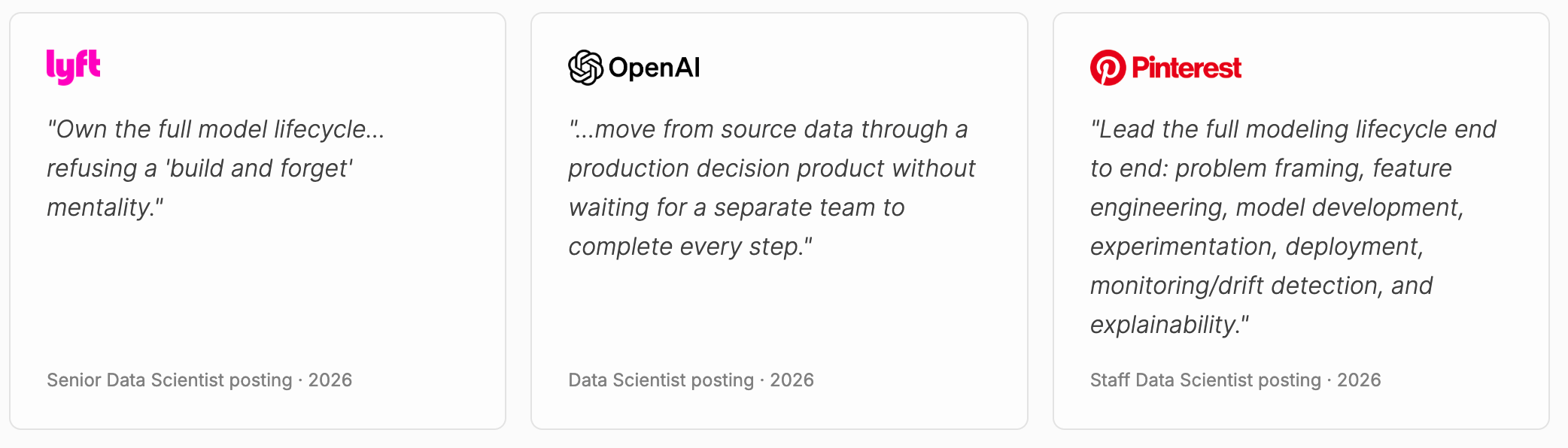
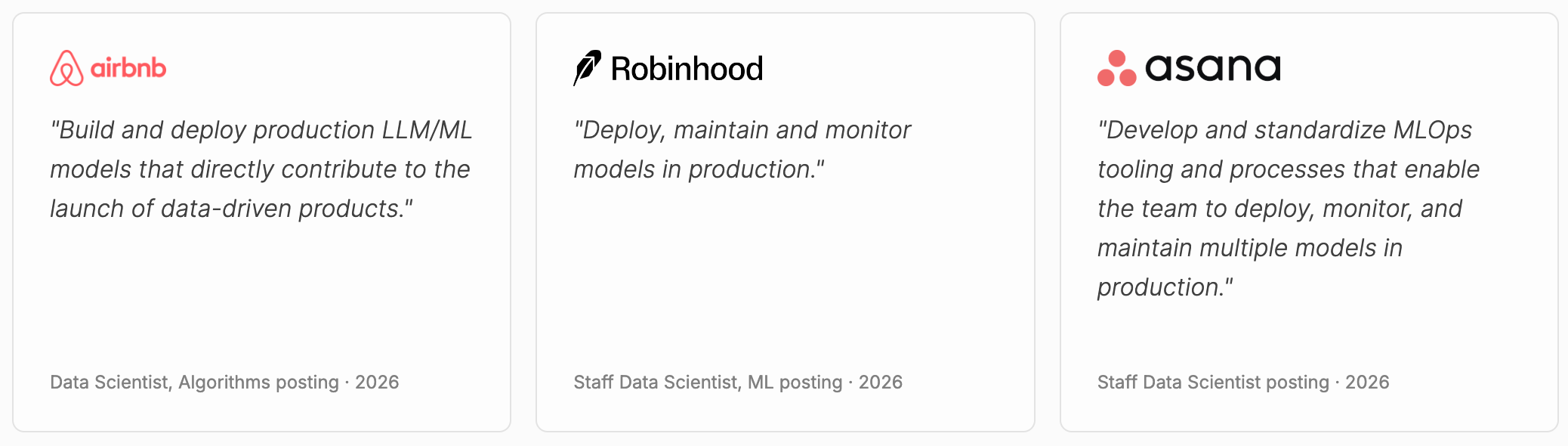
Ask most data scientists what it means to "own a model end-to-end" and you'll get some version of: build the model, put it in a Docker container, and keep it alive.
That's not it. That's shipping a model, not shipping a reliable system.
Shipping a system means thinking about what has to exist around the model so that it actually survives in the wild: What feeds it, what consumes its predictions, how it fails, how it gets retrained, how the business actually uses the output, etc…
The model is one component in a much larger picture, and if you’re only optimizing the component, you’re missing the point.
This is why so many models never see production. It isn’t a machine learning problem. It’s a systems design problem.
The skill that closes the gap
If I had to pick one skill worth investing in as a mid-to-senior data scientist right now, it’s systems thinking. Hands down!
The ability to see the whole picture around the model, not just the model itself.
System design is how you actually put that thinking to work. Given a business problem, you decide what to build and how everything around it should fit together so it works in the real world, and keeps working over time.
If you want to start learning system design, I made a whole video for you; watch it here.
One caveat: big tech is different
This shift hasn’t hit the same across all companies.
Big tech still behaves the way it always has, and probably will for the foreseeable future. They don’t expect data scientists to do all this on their own. They want the mindset, but don’t necessarily need the technical skills, because there are data engineering teams, infra teams, and software engineers to support you.
But most of us don’t work in big tech, and never will. Almost every startup and scale-up needs these skills. They’re hiring less than they used to, which means the bar is higher and they’re being much pickier about who they bring on. So if you’re not in big tech, this shift applies to you specifically.
That’s where the biggest opportunity is!
A couple of other great resources:
📚 Want to learn what it takes to deploy ML models? Check out my free mini-course on MLOps for Data Scientists.
🎥 Want to follow along on YouTube? I just launched a channel for data scientists. Don’t forget to subscribe to not miss any videos.
Thank you for reading! I hope this helps you take your career to the next level.
- Andres Vourakis
Before you go, please hit the like ❤️ button at the bottom of this email to help support me. It truly makes a difference!


