

So where does that leave us?
I’m sure you’ve heard the news, Claude just launched Dashboards: A way for you to connect your data warehouse, provide a simple prompt, and get a live dashboard back.
It's not the first tool to promise this, and it certainly won't be the last. But when one of the biggest AI labs ships it as a built-in feature, it's yet another clear sign that conversational analytics is here.
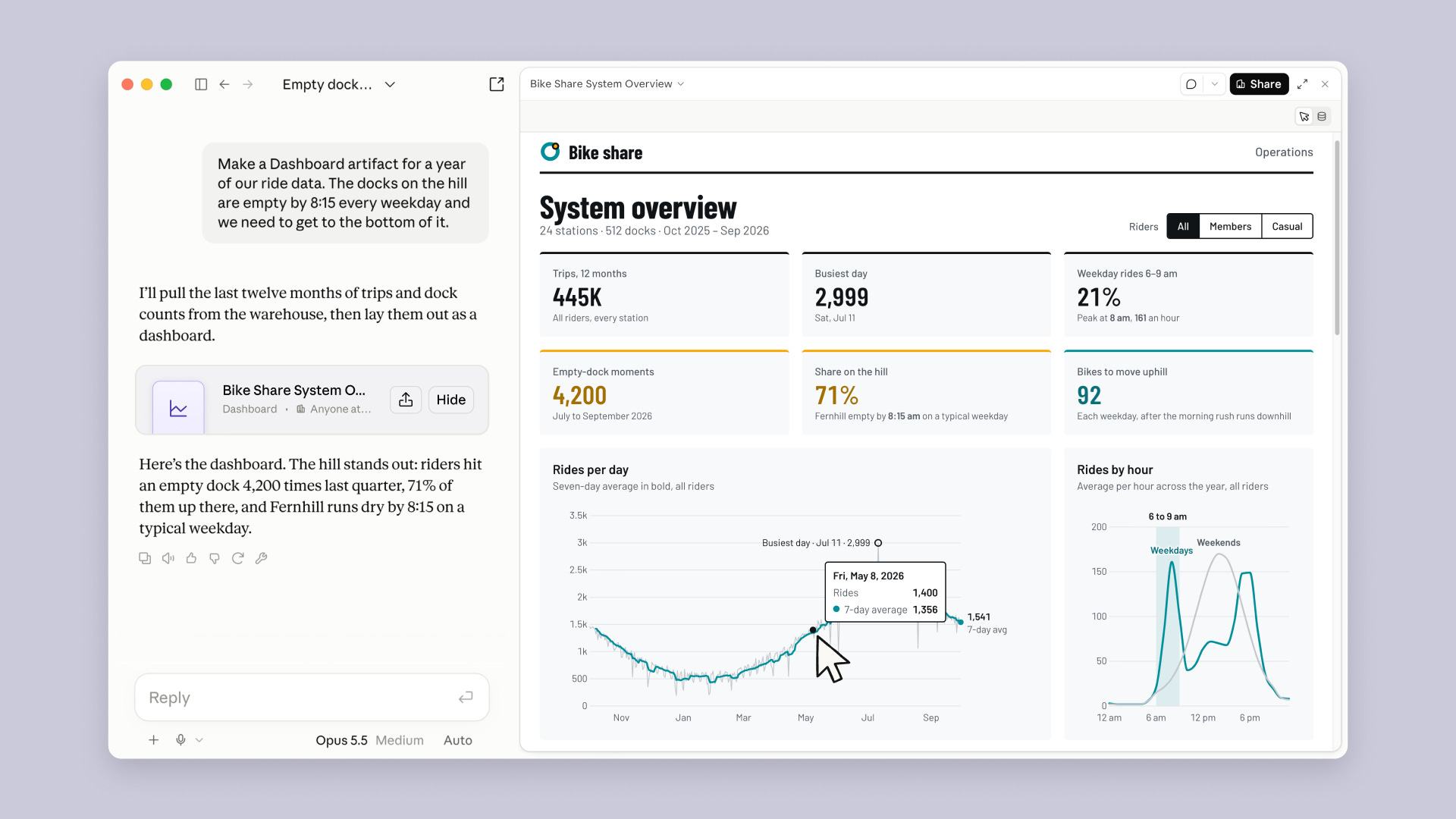
Which raises a question I think every data scientist should be asking right now: if anyone can ask the data a question, where do I fit in?
Having built these systems at work, I can tell you they’re great at the quick, everyday questions, like how many signups we got last week per market. The kind of requests that land on your Slack five times a day.
The questions that actually move a business, like why retention dropped or which customers are about to churn, still need someone who understands the data and the context behind it. So if these tools take the ad hoc requests off our plate, it frees us up for the deeper analysis and modeling we wanted to be doing anyway.
And this is where the opportunity is.
Companies clearly want this, but in my experience, plugging a generic tool into your warehouse won’t get them there. It doesn’t know how your team defines its metrics, the context behind your data, or who should be allowed to see what. Making it actually work takes someone who knows how to build these systems.
And that someone should be you.
Taking the next step…
For the past few months, I've been thinking a lot about how to make these new AI concepts easier to understand for data scientists and analysts.
You can read about agentic systems and evals all day (believe me, I have), and it still won't fully click. What made it click for me was building these systems myself, breaking them, and seeing exactly where things went wrong.
So I built two free, interactive tools that recreate that experience, and you’re getting them before anyone else. You can explore both in a few minutes, without setting anything up.
Both are built around Beam, my fictional media company with an analytics bot that answers business questions from its database.
One tool shows you how that bot is built, and the other shows you how to know whether it actually works.
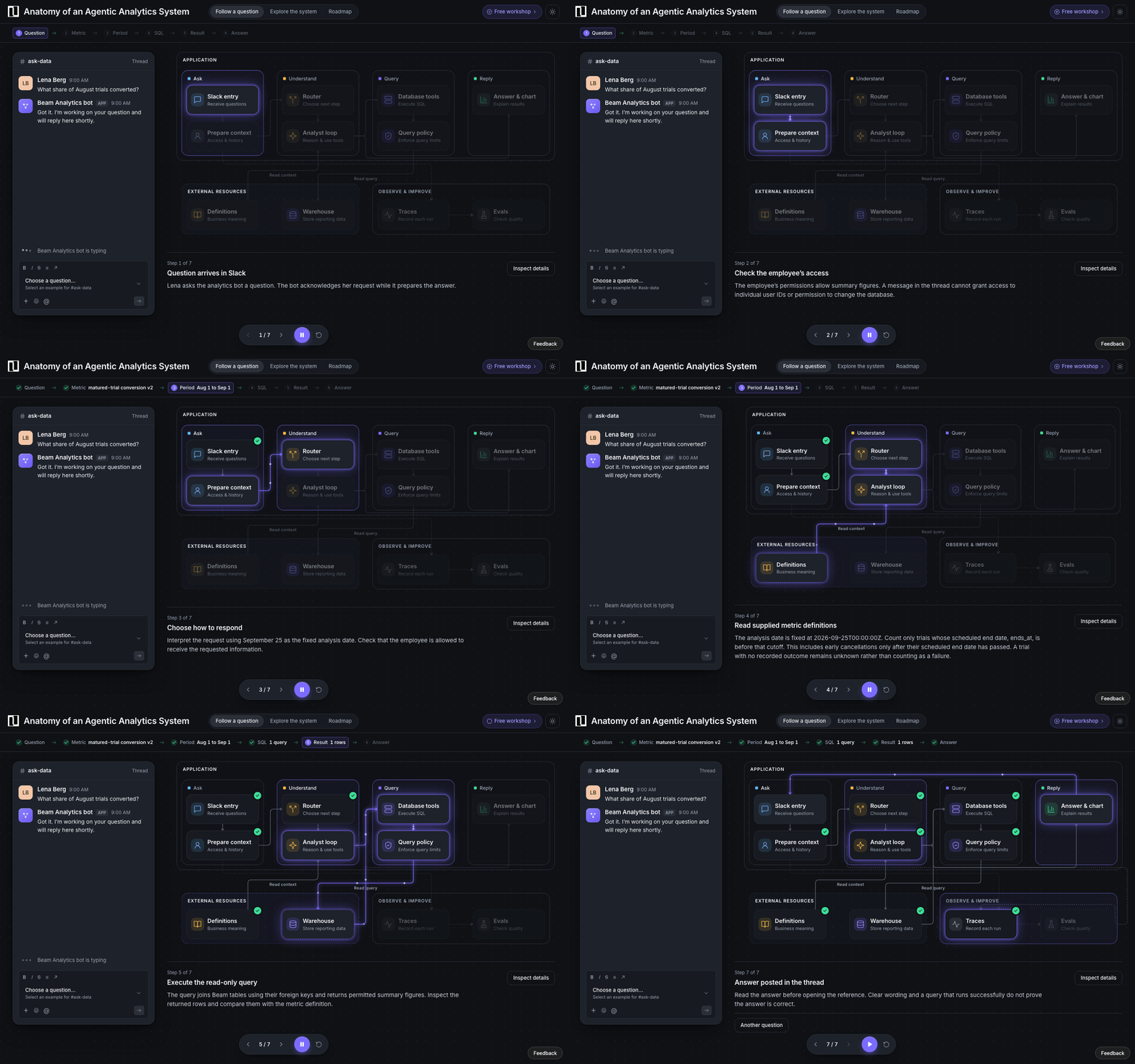
Tool 1: Anatomy of an Agentic Analytics System
When you ask an analytics agent a question, it feels like a single step. Behind the scenes, though, your question goes through conversation context, routing, metric definitions, SQL, and access controls before you ever see a number.
This tool maps out that whole system so you can see how each piece works and how they fit together, and it includes a roadmap for building one yourself.
Tool 2: AI Evals, Step by Step
This part will only become more crucial as more of these systems make it to production.
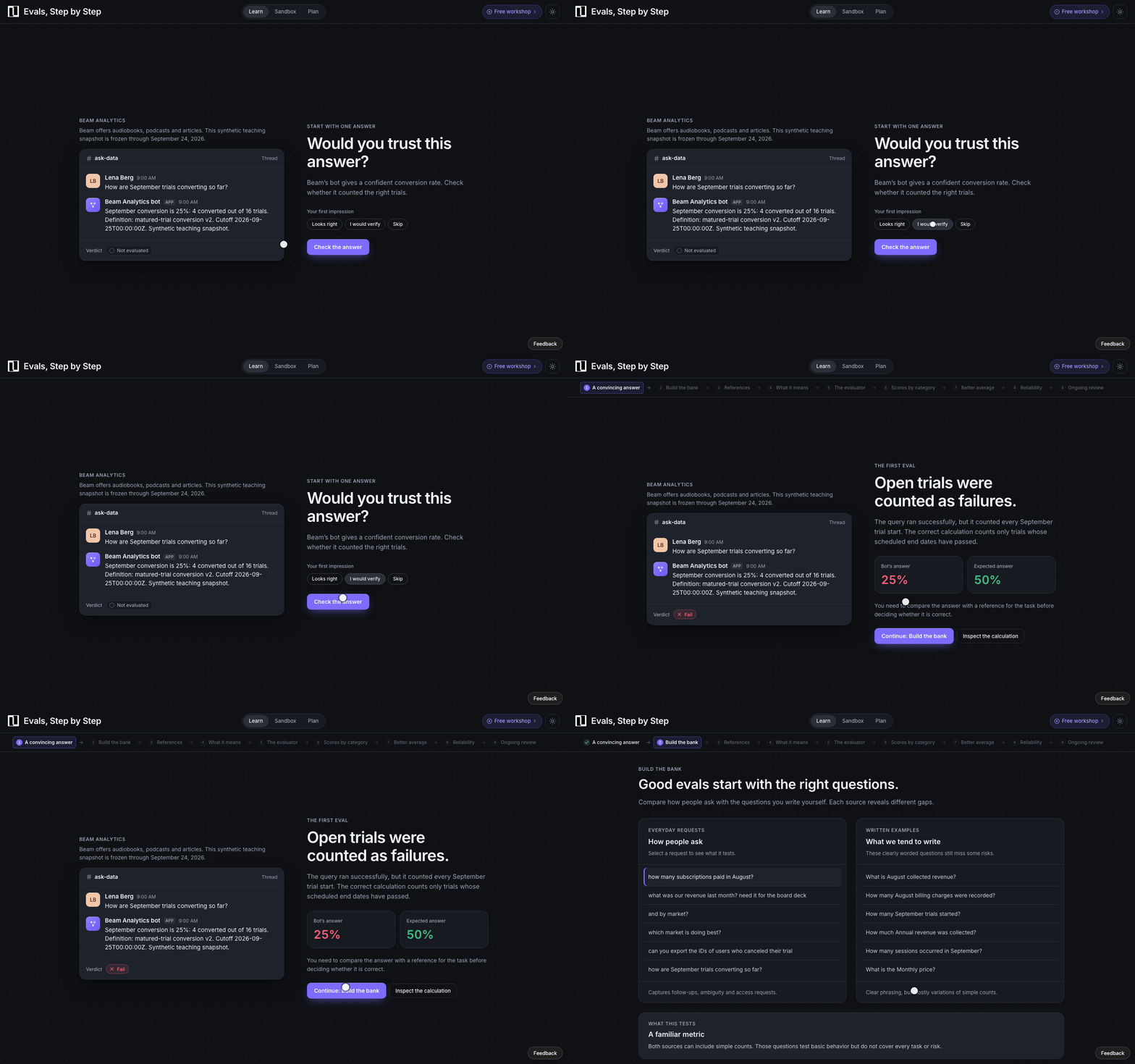
You fix a mistake and the answer looks right, but how do you know you didn’t break three other questions that worked fine yesterday? That’s what evals are for.
This tool teaches you how to set them up, from writing test cases to comparing two versions of your system, and helps you put together an evaluation plan for your own project.
This is just the beginning
These two tools are the first pieces of something bigger I’m working on.
Over the past few months, I’ve been building more interactive tools like these behind the scenes, and the plan is to bring them all together into one place where you can learn how modern data and AI systems work by exploring them, not just reading about them.
I’m not ready to share all the details yet, but you’ll be the first to know when it’s ready. In the meantime, I hope these two make a few things click for you.
And please let me know in the comments if you want more stuff like this.
A couple of other great resources:
🚀 Ready to take the next step? Build real AI workflows and sharpen the skills that keep data scientists ahead.
🎥 Want to follow along on YouTube? I just launched a channel for data scientists. Don’t forget to subscribe to not miss any videos.
Thank you for reading! I hope you found these tools useful
- Andres Vourakis
Before you go, please hit the like ❤️ button at the bottom of this email to help support me. It truly makes a difference!
Uhh you have a lot of placeholders for images and links